Pattern Heating
A metal pattern is mounted on the machine and heated. The heat is what cures the sand, so the pattern has to be metal rather than wood.
Moulding Route · Coimbatore
Shell moulding gives a smoother as-cast surface and closer repeatability than green sand. It is one of five moulding routes at our foundry in Arasur, Coimbatore, Tamil Nadu.
Capability Overview
Shell moulding uses resin-coated sand cured against a heated metal pattern. Instead of a full box of sand, the mould is a thin, rigid shell. That shell holds its shape well, so the casting comes out with a smoother surface and closer repeatability than green sand gives.
The practical gain is less machining stock. If a face needs only a light cut instead of a heavy one, machining time and material loss both drop. That matters most on smaller parts made in quantity, such as bearing housings, brackets and hydraulic valve bodies.
Shell is one of five moulding routes at our Arasur plant, and the same resin-coated sand is used for cores. Our core shop runs a 5 kg shell core shooter, and shell accounts for about 20 per cent of core production alongside cold box and CO2.
Route Specifications
What is confirmed for shell moulding at the Coimbatore plant. Weight and tolerance limits are part-specific, so we confirm them against your drawing rather than publish a range.
| Parameter | Specification |
|---|---|
| Moulding process | Croning shell moulding — resin-coated sand cured against a heated metal pattern |
| Why it is used | A better as-cast surface and closer dimensional repeatability than green sand, which cuts the machining stock a part needs |
| Place in the plant | One of five moulding routes at Arasur, alongside the DISA high pressure line, ARPA 450, ARPA 1300 and Alpha-set no bake |
| Shell core making | A dedicated 5 kg shell core shooter. Shell accounts for about 20 per cent of core production, with cold box at 70 per cent and CO2 at 10 per cent |
| Metals poured | Grey cast iron and ductile (SG) iron |
| Pattern material | Metal patterns — cast iron or fabricated steel |
| Melting | Four 1-tonne dual-track medium frequency induction furnaces, about 60 tonnes a day |
| Quality checks | Spectrometer reading on every heat, nodularity by ultrasonic velocity, CMM inspection, tensile and hardness testing |
| Typical components | Bearing housings, brackets, hydraulic valve bodies and other smaller parts where surface finish matters |
| Downstream in-house | Heat treatment, machining, coating and assembly on the same site |
| Plant location | Arasur, Coimbatore, Tamil Nadu — foundry, machine shop and testing lab under one roof |
| Part-specific limits | Weight range and achievable tolerance depend on the geometry. Send the drawing and we will confirm both before quoting |
How It Works
Four stages, from heated pattern to finished casting.
A metal pattern is mounted on the machine and heated. The heat is what cures the sand, so the pattern has to be metal rather than wood.
Resin-coated sand is tipped onto the hot pattern. A thin shell hardens against the pattern face and the loose sand falls away.
The cured half-shells are stripped off, then joined together with any cores already set inside, and supported ready for pouring.
Iron is melted in induction furnaces and checked on the spectrometer before pouring. Once cool, the shell breaks away and the casting is shot blasted, fettled and inspected.
Common Questions
Shell moulding uses resin-coated sand cured against a heated metal pattern. It makes a thin, rigid shell instead of a full sand box, which gives a smoother as-cast surface and closer repeatability than green sand.
Yes. Shell moulding is one of five moulding routes at our Arasur plant, alongside the DISA high pressure line, ARPA 450, ARPA 1300 and Alpha-set no bake.
Because of the finish and the repeatability. A better as-cast surface means less machining stock, which can cut machining time and material loss on parts made in quantity.
That depends on the part. Shell limits change with geometry, and we publish figures only where they are measured, so send the drawing and our engineering team will confirm the weight range and achievable tolerance before quoting.
Yes. The core shop runs a 5 kg shell core shooter. Shell is about 20 per cent of our core production, with cold box at 70 per cent and CO2 at 10 per cent.
Grey cast iron and ductile (SG) iron. Metal comes from four 1-tonne dual-track induction furnaces producing about 60 tonnes a day.
Smaller parts where surface finish matters – bearing housings, brackets and hydraulic valve bodies are typical.
Metal patterns, either cast iron or fabricated steel, because the pattern is heated in use. Tool engineering and casting simulation are handled in-house.
Yes. Over 40 CNC machines and the testing lab are on the same site, so castings can be supplied machined, inspected and ready to fit.
At 127/3B, Sangothipalayam Road, Arasur, Coimbatore, Tamil Nadu 641407, India. Plant visits and audits can be arranged through the contact page.
Send Us a Drawing
Send the part drawing with your annual quantity and material. Our team in Coimbatore will confirm whether shell moulding is the right route and what it can hold.
Before you go
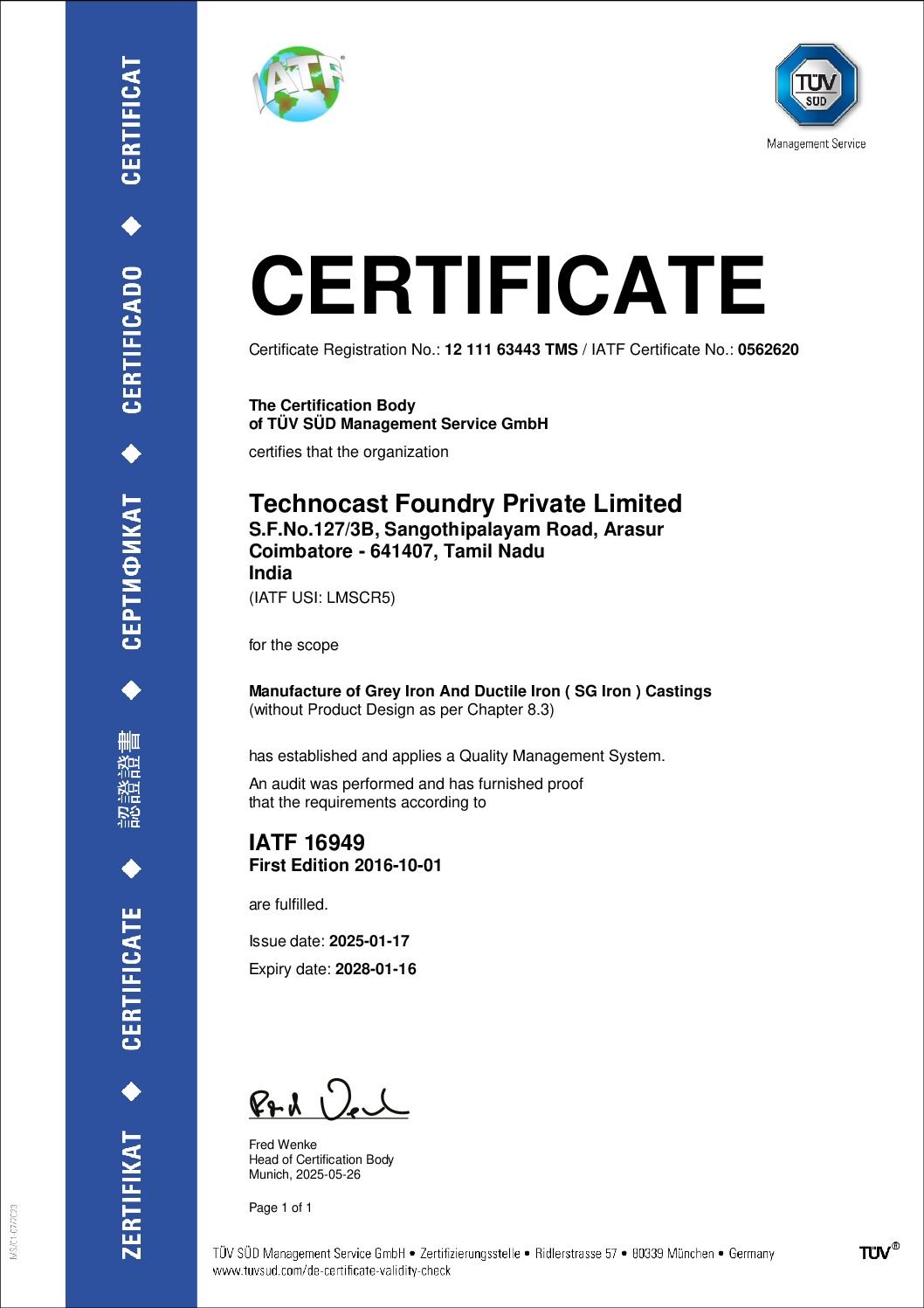
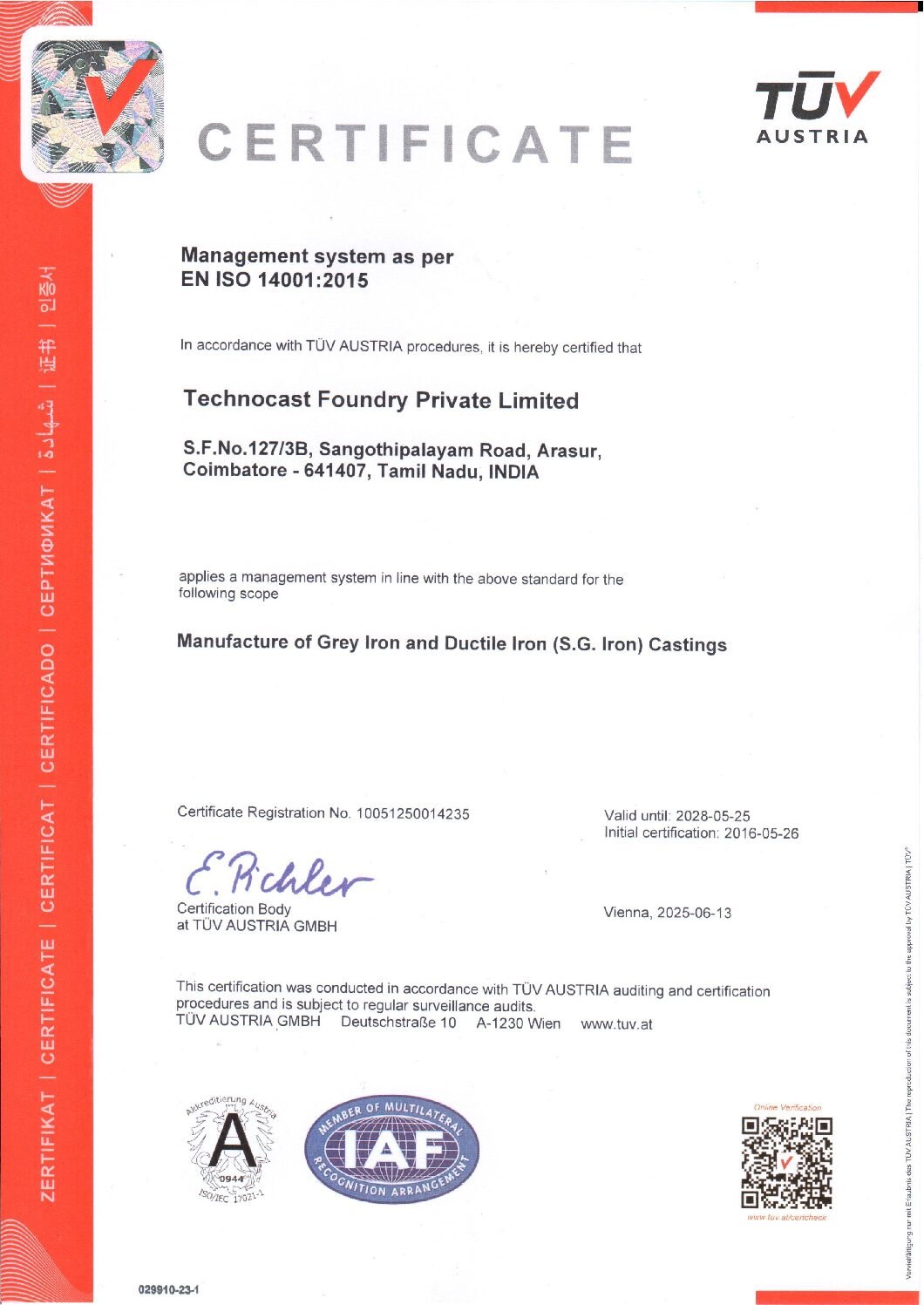
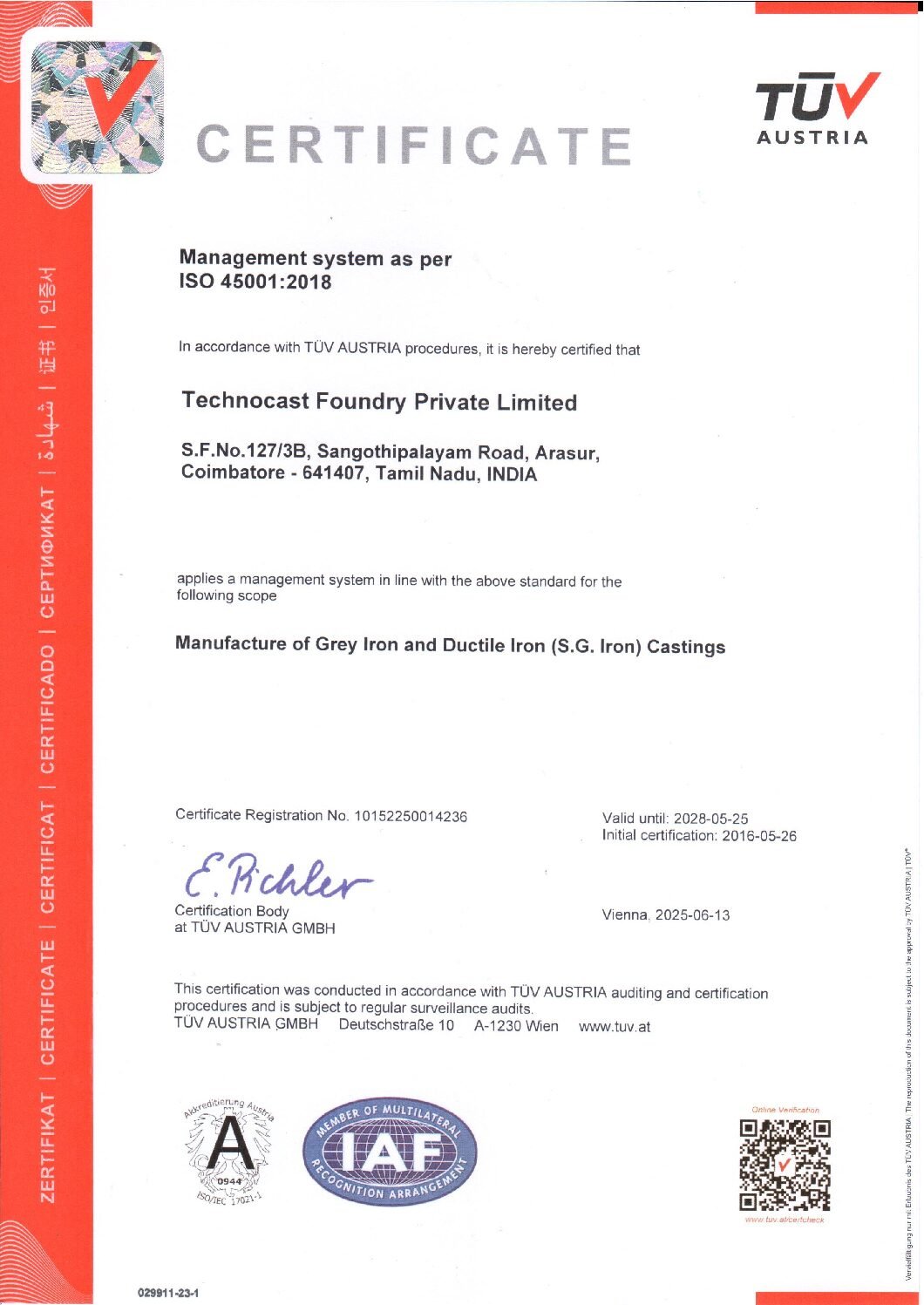
Our brochure and every current certificate, in PDF, for your vendor file.
Or send us a drawing